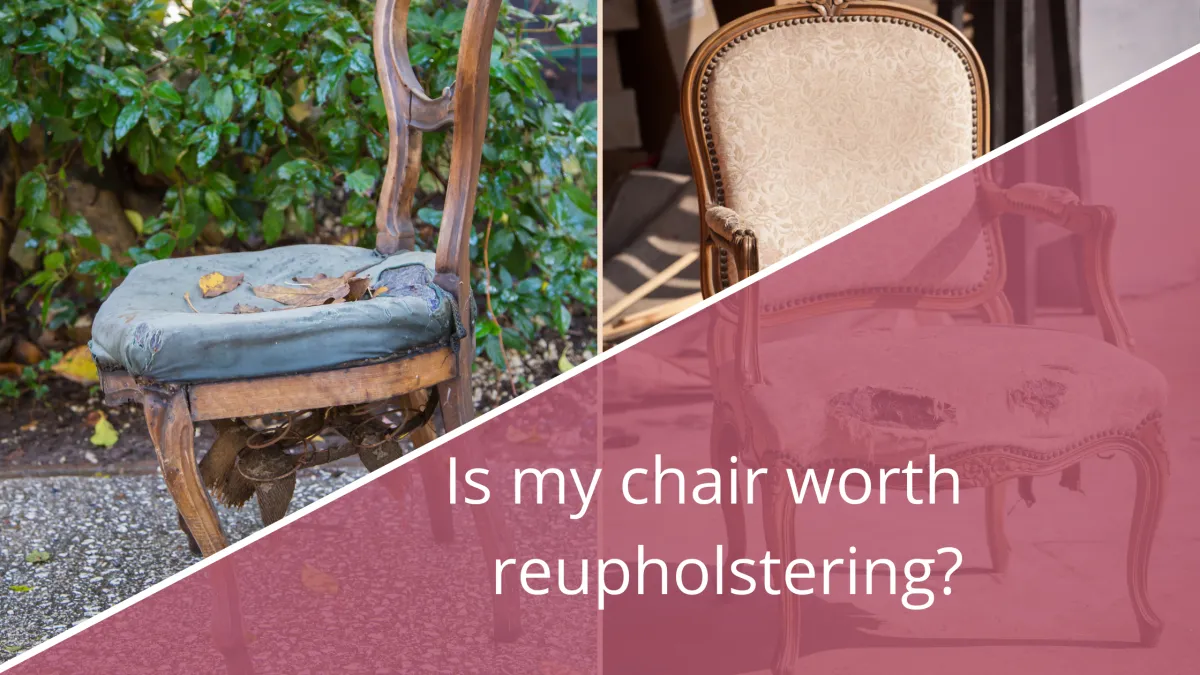
Is my chair worth reupholstering? Here's 7 signs it absolutely is
Is my chair worth reupholstering? Here's 7 signs it absolutely is
If you’ve dragged a chair out of a loft, spotted one at a charity shop, auction or inherited something from a relative that has definitely seen better days, you might be wondering whether it’s actually worth reupholstering. And I promise you, far more chairs are worth saving than people realise.
Traditional upholstery brings old furniture back to life in a way that honours its history, shape and craftsmanship. Before you decide to keep it, scrap it or haul it back to the attic, here are the seven things to look for.
Are you sitting uncomfortably? Then I’ll begin…
1. The frame is solid and well made
This is the very first thing to check. Traditional upholstery always begins with the bones of the chair, because the padding, stitching and webbing rely on the strength beneath them.
A chair is worth reupholstering if:
• the frame is hardwood
• the joints feel firm
• it doesn’t creak like an old ship
• it sits squarely on the floor
• you can lift it and feel it’s made from “real wood”, not something pretending to be
Older furniture was often constructed with craftsmanship you simply don’t find in mass-produced pieces today. Even if the upholstery is hanging on by a thread, a strong frame means you’re already halfway there.
If the frame has the wobble of a newborn foal, that’s another matter. But many wobbles can be repaired, so don’t rule it out.
2. The springs are still present (even if they look dreadful)
Springs often look terrifying to beginners. They pop out. They lean. They sag. They sometimes try to escape across the room. But springs in poor condition are not a sign that a chair is beyond saving – quite the opposite.
Traditional upholstery was built around springs for comfort and longevity. If the springs are there, we can work with them. They can be re-stitched, re-laced and brought back to their former glory.
Even if they’re slightly wonky or sitting in the wrong place, repairing them is part of the craft. The only real red flag is when springs have rusted so severely that they crumble. That’s rare though.
3. The stuffing is natural, not foam
If you’re lucky enough to peel back the top cover and find natural stuffing such as hair, fibre or cotton felt, then you’ve hit the jackpot. These materials can be reused, revived, teased and shaped again.
Foam is another story. Foam is my F-word for a reason. It crumbles, it discolours, it breaks down with age and it offers no structure. If your chair is full of foam but the frame is good, you can still upholster it - but you’ll be replacing all the stuffing with traditional materials.
Chairs with natural stuffing, even if it’s flattened or dusty, are usually worth every minute you spend on them.
4. You love the shape of the chair
Forget the colour of the fabric, the worn arms or the sagging seat. Those things are temporary. When you’re assessing a chair, focus on the curves, the silhouette, the proportions.
Is it elegant? Quirky? Classic? Slim and graceful? Comfortably plump? Does it have character?
Upholstery can’t change the fundamental shape of the frame, so if you love the skeleton, the rest can be transformed. With the right fabric and techniques, even the dullest chair becomes a statement piece.
5. It has sentimental or historical value
Sometimes a chair is worth saving not because of what it looks like, but because of what it means.
It might have belonged to a grandparent, been part of your childhood home, or carried fond memories of Sunday lunches, quiet reading corners or a cosy fireside perch.
Traditional upholstery lets you preserve that history while giving the chair a new future. I’ve seen students almost weep with joy when a sad old piece becomes something their families can love for another generation.
That is the heart of what and why I teach.... making antiques of the future.
6. Buying new would cost more (and not last as long)
Let’s be honest. Modern mass-produced furniture may look pretty on the shop floor but it’s often built with weak frames, thin materials, foam that collapses and, of course, staples. Endless, painful, finger-snapping staples.
Buying a new chair today rarely gives you the quality that older furniture naturally has. Restoring an older piece often gives you:
• better materials
• better construction
• a longer lifespan
• a more comfortable and breathable seat
• a one-of-a-kind result totally unique to you
Plus, you can choose any fabric you like, rather than whatever the shop happens to stock.
7. You’ve been itching to learn a new skill
This one matters more than people think. If you’ve got the curiosity, excitement or longing to learn how traditional upholstery works, then your chair is absolutely worth restoring.
Upholstery is hands-on, creative, soothing, mindful and full of “look what I did!” moments. Once you learn the basics of how to web, stitch a spring, build an edge and fit a top cover, you’ll start seeing every old chair as a potential masterpiece.
You don’t need experience. You don’t need a workshop. You just need the willingness to give it a go.
So, is your chair worth reupholstering?
If you said “yes” or even “maybe” to any of the seven signs above, then the answer is almost always:
Yes, absolutely.
Traditional upholstery lets you transform something tired into something beautiful. It allows you to express your personality, your creativity and your style. And it gives you a skill you can use for the rest of your life.
If you’re ready to start your first project, whether it’s a simple dining chair or something more ambitious -I’d love to teach you.
Learn traditional upholstery step by step
Join my online tutorials and learn how to strip, web, spring, stitch, stuff and finish your chair using proper, sustainable, traditional methods. All filmed up close, all easy to follow, and all available anytime.
Start learning upholstery today
👉learn.alisonscottupholstery.co.uk


